

MODERN DIAGNOSTIC APPROACH
Musculoskeletal Ultrasound
Technology in the service of personalised care.
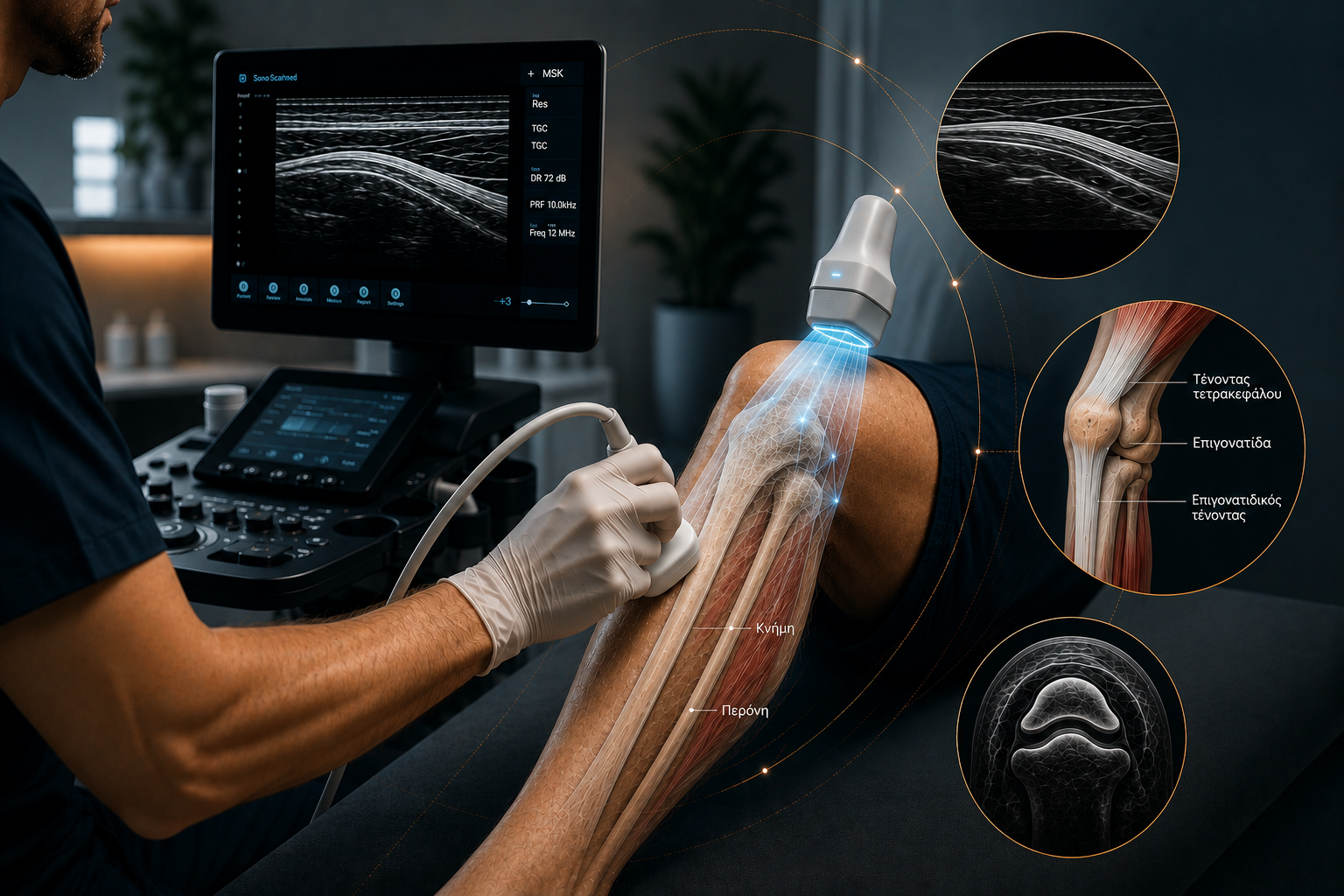
Technology has real value only when it helps physicians make better decisions for their patients. At our practice, high-resolution musculoskeletal ultrasound is an integral part of the clinical evaluation.
It enables us to assess muscles, tendons, ligaments, joints, and soft tissues in real time, during your consultation, without radiation exposure and without discomfort.
By combining a thorough clinical examination with immediate ultrasound imaging, we obtain more comprehensive diagnostic information, improve diagnostic accuracy, and develop a treatment plan tailored specifically to your individual needs.
Why Do We Use Musculoskeletal Ultrasound?
Immediate Diagnosis
Ultrasound imaging is performed during your appointment. In many cases, it allows us to confirm our clinical findings immediately and establish the most appropriate treatment plan without unnecessary delays.
Dynamic Assessment
Unlike many imaging techniques, musculoskeletal ultrasound allows us to evaluate anatomical structures while they are moving. This provides valuable information about the function of tendons, muscles, and joints under real-life conditions rather than from a static image alone.
Ultrasound-Guided Procedures
When an injection, fluid aspiration, or another interventional procedure is indicated, continuous real-time ultrasound guidance allows precise visualization of the needle, improving procedural accuracy while helping protect the surrounding anatomical structures.
Monitoring Recovery
Musculoskeletal ultrasound also enables us to monitor tissue healing throughout the recovery process and adjust the treatment plan whenever necessary to achieve the best possible outcome.
When Is It Useful?
- Muscle, tendon, and ligament injuries
- Tendinopathies
- Rotator cuff tears
- Bursitis
- Joint effusions
- Sports-related injuries
- Disorders affecting the shoulder, elbow, wrist, hip, knee, and ankle
- Superficial soft tissue lesions and masses
Training and Expertise
The diagnostic value of musculoskeletal ultrasound depends not only on the technology itself but also on the experience and expertise of the physician performing the examination. Dr. Kitsios has received dedicated training in musculoskeletal ultrasound through participation in international hands-on educational workshops, as well as through a structured ultrasound training programme developed by the Medizinische Universität Wien (Medical University of Vienna). This training encompasses both diagnostic musculoskeletal ultrasound and ultrasound-guided interventional procedures, following current international standards and best clinical practices.
"Musculoskeletal ultrasound does not replace the clinical examination or other imaging modalities, such as MRI, when these are clinically indicated. However, it is an exceptionally valuable diagnostic tool that enables faster, more accurate, and better-informed clinical decision-making."